Doors Open Before the Stream Does: Giving the NOW Fest Live Waiting Room a Proper Welcome
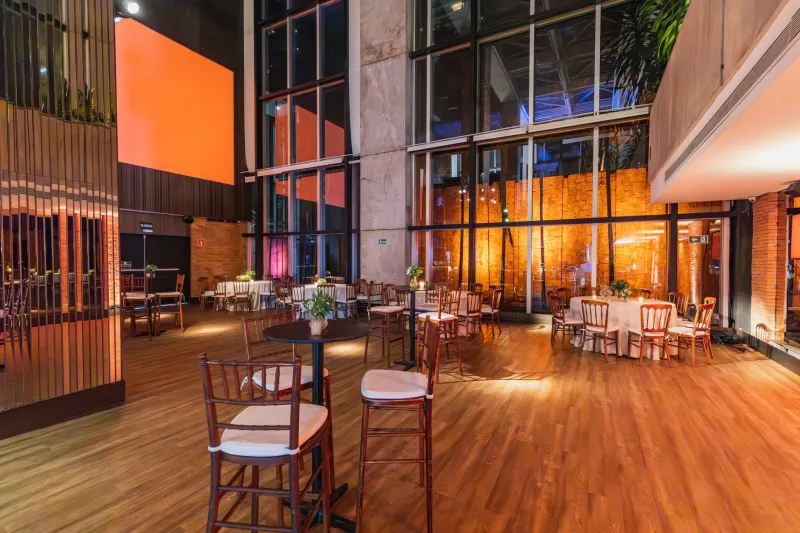
There is a particular kind of anticipation that comes with standing in a venue foyer before doors. You hear the low rumble of a soundcheck through the walls, clock a few familiar faces, check the weather app because you are definitely not dressed for the queue, and start debating whether to go in now or risk missing the support act. It is not the show. It is not nothing, either. It is the bit that tells your brain the night is actually happening.
Online, that bit is usually a loading spinner. You click into a NOW Fest Live stream a few minutes early, get a static frame and a timer that may or may not be accurate, and then you wait. For a platform built around the idea of a front row, it is a strangely cold start. The waiting room should not be dead air. It should be the virtual equivalent of a venue foyer: a place that says welcome, here is what is coming, and yes, the trains are a mess, so leave a bit earlier for your watch party.
The bit before the bit is still part of the night
Nobody expects the pre-show screen to rival the headline set. But the minutes before a stream are prime hospitality time. They are when casual viewers decide whether to stay, when watch-party hosts get everyone settled, and when fans who have travelled to a mate's flat or a local venue need a nudge that the night is about to start. At the moment, that time is mostly spent checking whether the stream has actually begun.
Calling it a waiting room is half the problem. Waiting is passive. A foyer is active. It has signage, atmosphere and useful information. NOW Fest Live could borrow that energy without turning the pre-show into a bloated advert break. The goal is simple: make the room feel warm, make the countdown useful, and make the first chord land better because everyone has already arrived.
A countdown with a job to do
A countdown is not automatically engaging. A huge clock ticking down to zero is fine for about thirty seconds. But a countdown that doubles as a schedule is genuinely handy. Show the next three moments: warm-up act at 19:45, main stage at 20:00, backstage cam at 20:10. That way the early arrivals know what they are early for.
The language matters, too. 'Stream starts in 04:12' is functional. 'Main stage in 04:12 — grab a drink' is friendlier. Small wording changes can make the screen feel like it was built by people who have actually been to a gig rather than a team who have only seen a spreadsheet. Keep it light. Keep it accurate. And if the running order shifts, update it on screen rather than leaving viewers to guess from the chat.
Soundcheck snippets, not spoilers
One of the easiest wins would be short soundcheck clips. Not the full song, not a reveal of the setlist, just the texture of the room: a guitar being tuned, a drum riser being tested, a few bars of something half-familiar. It is the audio equivalent of hearing the bass through the wall while you are still in the queue. It says something is happening without giving the game away.
There is a balance to strike. Soundcheck footage should be cleared with the artists, captioned where there is speech, and kept short. It should not become a teaser trailer with dramatic whooshes. The charm is in the rough edges: crew voices, a stray note, the moment the room starts to sound like a room. That is the sort of backstage access NOW Fest Live already does well. It belongs in the waiting room as well as the main feed.
Shoutouts with local knowledge
A generic 'welcome, music fans' message is fine once. After that, it is wallpaper. A better approach is a rolling venue and location ticker: 'Viewers tuning in from Leeds, Cardiff, Glasgow, Norwich and a surprisingly crowded watch party in a Sheffield kitchen.' Not forced banter, just a sense that the stream has landed in lots of different places at once.
Venue-specific shoutouts could work in the same way. If the stream is coming from a venue with a famous side door, a decent chip shop nearby or a notoriously slow cloakroom, lean into it. UK fans love that sort of detail because it turns a stream into a shared night out. It also gives watch-party hosts something to read aloud when the room goes quiet. The tone should stay neutral and friendly rather than trying to manufacture a local rivalry that nobody asked for.
A ticker for the trip
Here is the practical bit. If fans are heading to watch parties, the waiting room could carry a simple UK travel and weather ticker: train delays on the relevant line, a Met Office warning for the area, road closures near a partner venue, the last sensible coach home. It does not need to be a full travel app. A few scrolled lines, updated properly, would make the pre-show screen useful in a way that a looping animation never will be.
This is especially relevant for winter streams. A rainy Saturday in November is not the moment to discover that the 23:12 has been cancelled and the nearest bus replacement is a rumour. A small note in the corner — 'Check your last train before the encore' — would be a genuinely thoughtful touch. It also fits the NOW Fest Live brief: live-event news and digital access, aimed at people who are trying to make a night of it, whether they are in the venue or on the sofa.
Keep it skippable, accessible and short
The waiting room should never feel like a toll gate. Everything useful should be skippable, and the stream should still start on time whether viewers engage with the warm-up or not. Captions should be on by default for any spoken content. Reduced-motion options should be available for the countdown and ticker. Volume should start low rather than blasting a soundcheck snippet into someone's quiet carriage.
And it should be short. Five to ten minutes of proper warm-up is plenty. The mistake would be building a twenty-minute pre-show that makes the actual start feel like an afterthought. The waiting room is there to serve the show, not compete with it.
Hospitality, not filler
The best venues understand that the experience starts before the first act and continues after the last. NOW Fest Live has spent 2026 building a convincing case that a stream can feel like a front row. The waiting room is the one part of that journey still stuck in the car park. Turn it into a foyer: a countdown that guides, soundcheck snippets that set the scene, shoutouts that make the audience feel seen, and a travel ticker that respects the fact that people have real journeys to plan.
None of this needs to be overproduced. It just needs to feel considered. The first chord is always going to do the heavy lifting. The least we can do is make the minutes before it feel like we have opened the doors properly.