The 23:47 Question: What If NOW Fest Live Knew Your Last Train?
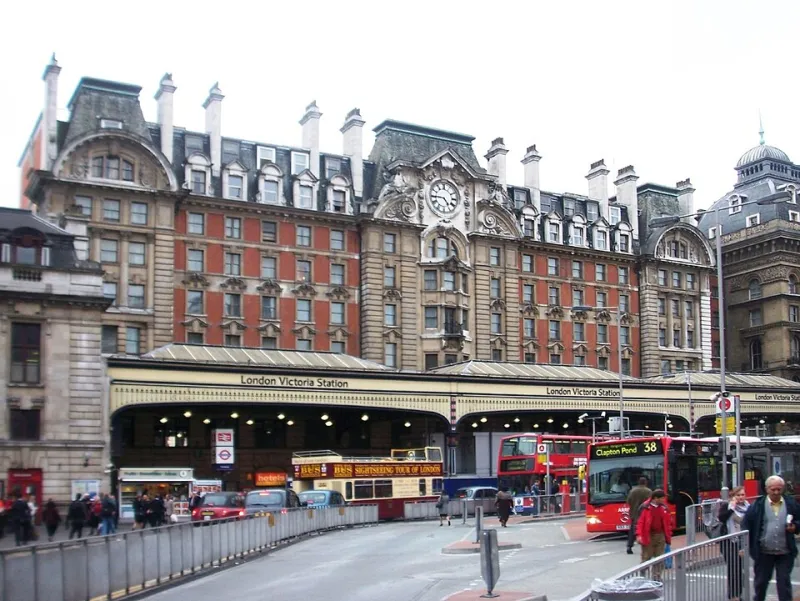
Photo: surprise truck, CC BY 2.0, via Wikimedia Commons
NOW Fest Live makes a simple promise: front row to every NOW Fest moment. For most of the weekend, that promise holds. Then the clock edges past 23:00, the headliner comes back for the encore, and a very British calculation begins. Do you stay for the last song, or do you shut the laptop and sprint for the last train? That is not really a front-row experience. It is a deadline with a chorus.
The problem is not that NOW Fest Live lacks atmosphere. The problem is that the stream exists in festival time while the rest of the country runs on National Rail time. A fan in London might be weighing the Elizabeth line against a night bus. A fan in Manchester is thinking about Piccadilly. In Leeds, it is the walk to the bus station. In Birmingham, it is New Street, and in smaller towns it is the one coach that absolutely will not wait. A travel-aware curfew mode would not solve every journey, but it would stop the final ten minutes of the stream from feeling like a trap.
The false choice at the end of the night
Late-night viewing already asks a lot of UK fans. We are a country of last services, replacement buses, engineering works and the quiet dread of a station concourse after midnight. NOW Fest Live can be brilliant at putting us in the crowd, but it cannot keep pretending that the crowd goes home by magic.
A one-size-fits-all encore is the issue. The stream wants to hold everyone to the final note. Real life wants some viewers on a platform by 23:30. Those two things can coexist, but only if the product acknowledges the second one. At the moment, the choice is implied: commit to the whole set or miss the ending. That is not a fair ask for fans with caring responsibilities, early shifts, accessible travel needs or a two-mile walk from the station.
What a travel-aware curfew mode would actually do
This should be an opt-in setting, not a surveillance feature. A viewer picks a city, a station or a rough journey plan, and NOW Fest Live shows a discreet countdown to the last sensible connection. Not just the last train, either — the last train plus the walk, the platform change, the bus replacement and the bit where you realise you have left your coat in the kitchen. The useful number is not the departure time. It is the time you actually need to leave the stream.
The overlay could sit in the corner of the player as a small badge, so it does not interrupt the set. Ten minutes before the cut-off, it could nudge you once. Five minutes before, it could offer a clean exit marker. If the stream is running long, it could flag that the final encore is likely to clash with a specific service. That is not about rushing the artist. It is about giving the viewer honest information while there is still time to act on it.
There is also a neat role for the replay. If a fan has to leave before the encore, the curfew mode could drop a bookmark at the point they left, ready for the morning after. No spoilers, no guilt, no frantic scrolling through a two-hour stream to find the bit they missed.
Why this fits the front-row promise
Front row should mean close to the action, not trapped by it. NOW Fest Live has already built a convincing case that watching at home can feel like being in the room: the camera work, the backstage feed, the chat, the sense that something is happening now. A travel-aware curfew would strengthen that promise rather than weaken it. It says the stream respects the viewer’s whole evening, not just the bit between the first chord and the last.
It also fits the UK audience. We are used to planning around timetables. We are also used to event organisers forgetting that the last service is part of the night out. A festival stream that understands the difference between London’s late-night options and a rural line with one train every two hours would feel genuinely made for the people watching it.
Watch parties, chat and the replay safety net
Watch parties would benefit too. A host in Bristol should be able to set a party curfew without turning the evening into a military operation. The stream could show a shared countdown, so nobody has to be the person who says the awkward thing at 23:20. The chat could keep its usual energy without turning into a constant travel advisory. A quiet, opt-in badge is enough.
The replay is the safety net. Not everyone wants to watch live, and not everyone can. If the travel-aware mode creates a clear marker for the point where a viewer had to leave, the post-show replay becomes more useful. It also gives the late-night chat a softer landing: people can bow out without feeling like they have failed the final song.
The caveats worth getting right
This only works if it stays opt-in and low-friction. No one wants a travel alert popping up during a quiet acoustic number. The data needs to be accurate enough to be useful, and honest enough to say when it is not sure. Strikes, engineering works and station closures can change everything. A curfew mode should be a helper, not a guarantee.
It also should not become a sponsorship slot. The moment a last-train countdown is brought to you by a coach company, viewers will stop trusting it. Keep it practical, keep it quiet, and keep it on the viewer’s side.
A small feature with a big late-night payoff
The 23:47 question is not really about trains. It is about whether a livestream understands the rest of the night. NOW Fest Live has spent 2026 building a convincing case for watching from home. A travel-aware curfew mode would be a natural next step: one that protects the closing song for the people who can stay, and protects everyone else from having to choose between the encore and the last service home.