Sing It If You Know It: The Case for a Lyrics Layer on NOW Fest Live

Photo by Photo by Vitaly Gariev on Unsplash on Unsplash
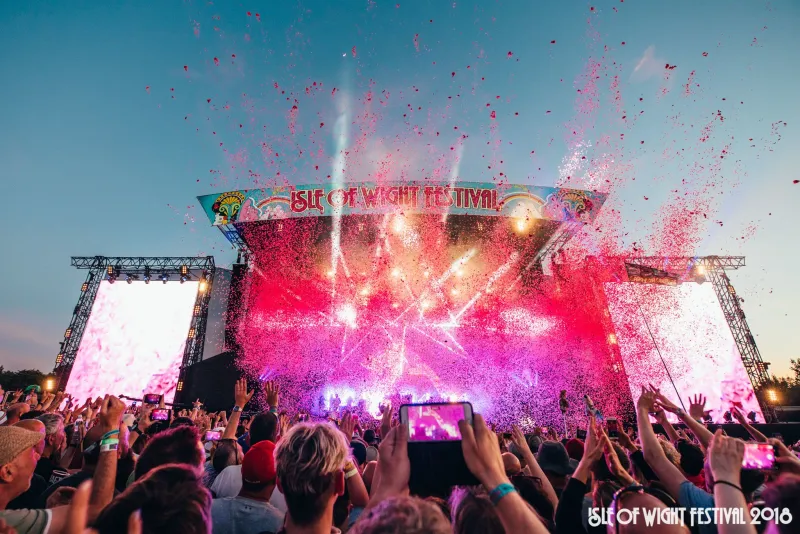
There's a moment that happens at every NOW Fest, usually on a smaller stage, usually just after sunset. An artist you've half-heard on the radio plays the one song everyone at the venue seems to know. The crowd leans in. The chorus lands. And you, sat on the sofa with a cup of tea going cold, are a beat behind — mouthing the vowels, guessing at the consonants, hoping nobody in the room is watching you closely.
That's the karaoke gap. Not a failure of taste, and not really a failure of discovery. It's a timing problem. You found the song three weeks ago; the people in the field found it three months ago. At a festival, the crowd carries you. At home, you're on your own.
An optional lyric-caption layer on NOW Fest Live wouldn't close that gap entirely. But it would make the gap a lot more fun to fall into.
It's not about not knowing the songs
Let's be clear about what this isn't. It isn't a suggestion that NOW Fest Live viewers are somehow less engaged than the people standing in the mud. Plenty of us have had the same songs on repeat since the line-up dropped. But a festival is a discovery engine as much as a jukebox. The whole point of a side stage is that you wander past something you didn't plan to see. On the stream, that wandering is a click. The discovery is quicker, and so is the moment when you realise you'd quite like to sing along but you don't yet know the second verse.
Captions for lyrics aren't a crutch. They're a bridge — a short one, between hearing something for the first time and feeling like you're part of it.
Captions are not subtitles
The word "captions" tends to summon a particular image: a chunky block of text at the bottom of a documentary, describing a door slamming. That's not what this is. A lyric layer would be timed to the music, line by line, sitting quietly in the lower third and getting out of the way when the song does. No descriptions of the drummer's facial expressions. No [applause] in the middle of a guitar solo. Just the words, in time, optional.
Think of it less like subtitling and more like the lyrics screen in a karaoke booth — except the booth is your living room, the song is actually good, and you haven't had three pints.
The distinction matters because it changes the design brief. A lyric layer shouldn't be a permanent fixture cluttering the picture. It should be a toggle: there when you want it, gone when you don't. Default it off, or default it on for the first chorus of a set and let people decide. Either way, the viewer stays in charge.
The shared-living-room problem
Here's a thing about watching a festival at home in the UK in 2026: it's rarely a solitary experience. It's a flatmate hovering by the kitchen door. It's a partner reading on the other end of the sofa. It's a sleeping baby upstairs and a volume dial hovering around the nine o'clock mark.
In those conditions, lyrics do a lot of heavy lifting. They let you follow a song you can barely hear. They keep you connected to the set when the audio is turned down to a respectful murmur. They make a shared space feel like a shared event, even if half the people in it aren't really watching.
And for viewers who are deaf or hard of hearing, a well-timed lyric track is an accessibility win that doesn't announce itself as one. It just makes the set more followable. That's the best kind of access feature: the kind that improves things for everyone and patronises no one.
The side-stage test case
The strongest argument for this sits away from the main stage. NOW Fest 2026 has a decent crop of emerging artists tucked into the smaller slots — the ones with two singles, a support tour and a very committed fanbase of about four hundred people. Those are exactly the sets where lyrics would earn their keep. You catch a chorus once, read it as it goes past, and by the second chorus you're in. That's not cheating. That's how a crowd learns a song in the first place.
At a venue, the people around you teach you the words. On a stream, there's nobody to lean over and ask. A lyric layer is the digital equivalent of the stranger next to you shouting the chorus in your ear — only, you know, more pleasant.
What "good" actually looks like
A few practical notes, because this is the sort of feature that can go wrong quickly.
- Line by line, not word by word. Word-by-word captions turn a song into a typography exercise. A whole line, appearing a beat before it's sung, gives you time to join in.
- Artist-supplied where possible. Nobody wants a well-meaning transcription algorithm mangling a chorus. If the lyrics come from the artist, they're right, and the artist gets a say.
- Out of the way. Lower third, clean type, no boxes. If it covers the bassist's hands, it's badly designed.
- Easy to kill. One tap, gone. A viewer who doesn't want lyrics shouldn't have to fight the interface to get rid of them.
None of this is technically exotic. Streaming platforms have been doing timed text for years. The hard part is restraint.
The fair pushback
There are reasonable objections. Some artists improvise whole verses and wouldn't want a stale lyric file on screen. Some songs are better when the words are a bit of a mystery. Rights and clearances add friction, and a caption that's half a second out is worse than no caption at all.
But most of those are solved by the same word: optional. An artist can say no. A set can go without. A viewer can switch it off. The existence of a toggle doesn't force anyone into a singalong they didn't ask for.
NOW Fest Live has already made a bit of a habit of this sort of thing — BSL on the main stage, a flat-friendly audio mode, a wet-weather playbook for the stream. A lyric layer fits that pattern. It's a small switch with a long echo: a feature that makes the stream feel less like watching and more like being there, even when you're on the sofa and the chorus is already halfway gone.
Sing it if you know it. And if you don't quite know it yet, maybe that's the bit worth fixing.