The Unseen Setlist: Five Crew Roles Keeping NOW Fest Live on Air
Watching NOW Fest Live from the sofa, it is easy to assume the show begins when the stage lights go up. In reality, it starts hours earlier, in a blur of cable coils, clipboard checks and quiet conversations about wind speed. The artists get the applause, and rightly so. But the broadcast only reaches your screen because a small city of crew members is already at work, mostly out of shot. With the 2026 coverage taking shape, it feels like the right time to look at the people who make the whole thing tick.
The Riggers: Making the Sky Safe
Before anyone sings a note, riggers are checking motors, trusses and load limits. At an outdoor festival, that means keeping one eye on the weather and another on the weight distribution above the stage. A rigger is not just hanging lights for the look of it; they are making sure the structure can handle a British autumn, a sudden gust and whatever the lighting designer dreamed up at 2am. When rigging goes right, nobody notices. When it goes wrong, the show does not happen. No rigger wants to be the reason a headline set is delayed, so they work in a rhythm of checks, double-checks and hand signals that most fans will never see.
The Runners: Backstage's Human Satnav
Runners are the connective tissue of a festival. They move artists between dressing rooms and stages, ferry guest-list envelopes, track down missing water bottles and somehow find a spare guitar strap five minutes before doors. It sounds simple until you realise backstage is a maze of temporary cabins, locked gates and people who all look like they know where they are going. A good runner keeps the schedule from unravelling. Without them, a fifteen-minute delay can turn into a forty-minute wait, and the knock-on effect reaches the stream faster than you would think.
The Sound Techs: The Mix You Never Hear
There are two sound worlds at NOW Fest Live: the one in the field and the one coming through your speakers at home. Monitor engineers make sure the artist can hear themselves, while broadcast mixers shape the feed for viewers. They are the people who notice a vocal sitting too low, a snare eating the room, or a crowd mic that sounds like a washing machine. Their work is invisible when it is good and very obvious when it is not. A muddy mix or a burst of feedback can flatten a great performance, which is why the sound team is often making tiny adjustments right through the set.
The Camera Operators: Framing the Moment
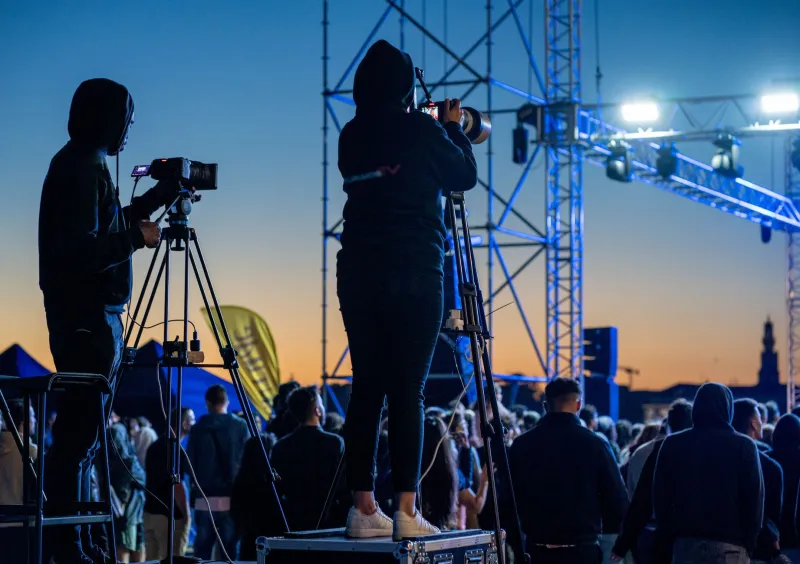
A camera operator has to think like a fan and react like a professional. They are in the pit, on the risers and at the back of the field, carrying kit that gets heavier with every song. They need to catch the drummer's grin, the lead singer's quick glance at the crowd and the confetti cannon that fires a beat earlier than expected. Rain covers, battery changes and lens wipes are all part of the job. When the director calls for a close-up, the operator has about two seconds to deliver it. If they miss, the moment is gone, and no amount of editing can put it back.
The Stream Engineers: Keeping the Signal Honest
Stream engineers are the reason the show reaches your laptop without turning into a slideshow. They watch bitrates, latency and redundancy feeds, ready to switch paths if a connection coughs. They are not in the venue's glamorous corners; they are often in a portacabin or a production truck, staring at graphs while a headline set kicks off. Their job is to make the complicated stuff feel simple. When the stream holds steady, they have done their job. When it buffers, they become the most important people on the site.
What Happens When They Are Invisible
A missing runner can leave an artist stranded. A tired rigger can force a safety delay. A sound tech having a bad night can turn a huge chorus into a mush. A camera operator with a dead battery can cost the broadcast its best reaction shot. A stream engineer without a backup plan can lose the feed altogether. None of these roles are glamorous, and most of them are deliberate about staying out of the frame. That is exactly why they deserve a nod. The smooth, effortless feel of a live broadcast is usually a sign that a lot of people are doing very careful work behind the scenes.
A Short Crew Cam for 2026
NOW Fest Live does not need to turn the broadcast into a behind-the-scenes documentary. A sixty-second crew cam segment during a changeover could do the job nicely. Show a rigger clipping a motor, a runner jogging a setlist across the site, a sound tech riding a fader, a camera operator wiping rain from a lens, and a stream engineer watching the numbers hold steady. Keep it brief, keep it respectful and let the crew get the credit without turning them into performers. It would give viewers a fresh appreciation for the machine behind the music, and it would fit naturally alongside the backstage content fans already enjoy.
The artists are the reason we tune in. The crew are the reason we can. In 2026, a small on-air thank-you would go a long way, and it would remind everyone at home that the front row is only possible because a lot of people are standing just out of sight.