Five Cuts That Put Us in the Crowd: The Direction Choices That Made NOW Fest 2026 Sing
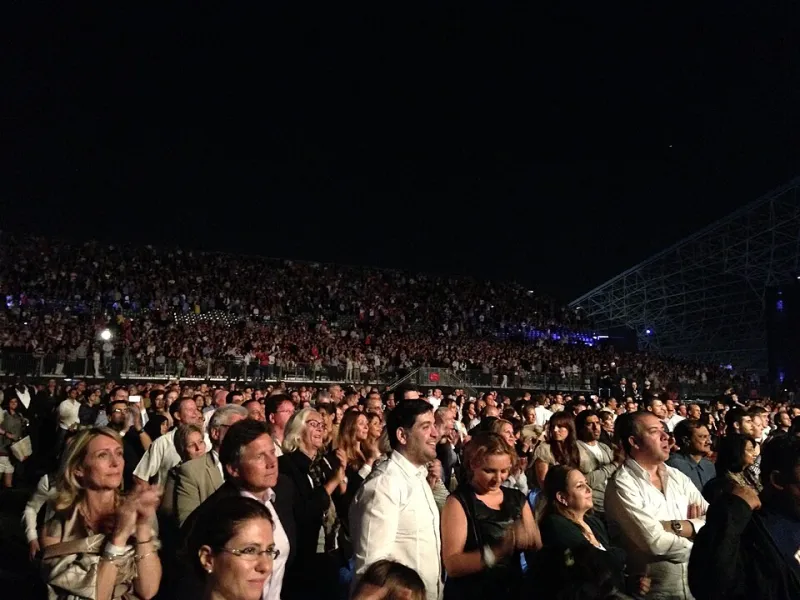
Photo: Amajali, CC BY-SA 3.0, via Wikimedia Commons
There is a moment in every great livestream when you forget you are watching a screen. The sound is one thing, but the picture does the heavy lifting. At NOW Fest 2026, the direction team made a series of choices that turned a multi-camera broadcast into something closer to a front-row ticket. These are the five cuts that stood out — not because they were flashy, but because they understood what a live crowd feels like from the inside.
1. The drummer close-up that caught the engine room
The first big cut of the weekend came early in a mid-afternoon set, and it went straight to the drummer's hands. Not the full kit. Not the drummer's face. Just the sticks, the snare and the blur of movement that makes a live band tick.
It worked because it was specific. A wide shot tells you a band is playing. A close-up on the drummer's grip tells you how hard they are working. You could see the rebound, the wrist snap, the tiny adjustment before a fill. For viewers at home, it translated the physical effort of the performance better than any wide stage shot could.
That is the craft of live music broadcasting in miniature. The director is not just covering action; they are choosing where the audience's eye should go. In that moment, the answer was the engine room, and the result was a shot that made the whole set feel more human.
2. The bass-cam that made the low end visible
Later in the evening, a bassist got the kind of treatment usually reserved for guitar solos. The camera dropped low and tight, catching the strings vibrating against the fretboard while the stage lights flashed behind. It was a simple shot, but it did something clever: it gave a visual shape to a sound that is often felt rather than heard.
At home, bass can get lost in a laptop speaker or a pair of cheap headphones. By showing the movement of the strings, the broadcast gave viewers something to latch onto. You could almost hear the low end through the picture. It also made the bassist a focal point rather than part of the backdrop, which felt earned.
The best music direction does this: it finds the visual equivalent of a sonic detail. This cut was not about spectacle. It was about translation.
3. The crowd pan that arrived on the chorus
There is a risk that crowd shots become filler. A quick sweep of raised hands, a few flags, back to the stage. But one pan at NOW Fest 2026 landed with perfect timing. It started on the edge of the crowd, moved across a row of faces, and arrived at the moment the chorus hit.
Why did it work? Because it let the audience do the singing. For a second, the stage disappeared and the broadcast became about the room. You saw the words being shouted back, the arms around shoulders, the person who knew every syllable. It made the viewer at home feel like part of a collective rather than someone watching from outside a window.
The timing was everything. A crowd pan a few seconds earlier would have been decoration. A few seconds later would have been a missed cue. This one was a reminder that live broadcasting is a reactive craft. The director has to feel the song as well as follow the script.
4. The wide shot that let the lights do the talking
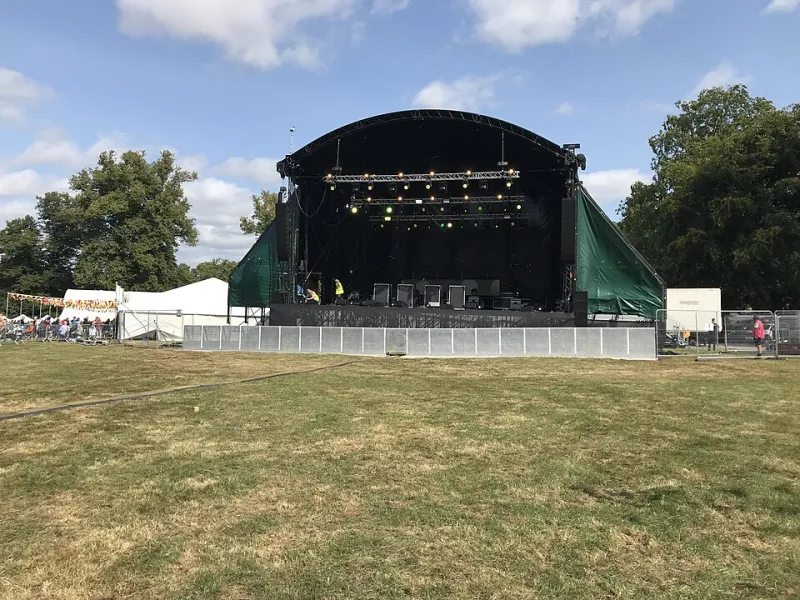
Not every great cut is a close-up. One of the most memorable frames of the weekend was a wide shot during a slow, building track. The stage looked small under a canopy of lights, and the crowd stretched back into darkness. Nobody was doing anything dramatic. That was the point.
The shot worked because it gave the performance space. After a run of tight cuts, the wide frame let the audience breathe. It also showed the scale of the moment — the lights, the rig, the size of the field — without turning it into a drone advert. It trusted the atmosphere to carry the shot.
At home, that kind of frame can feel distant if it is used too often. But placed carefully, it opens the room up. It reminds viewers that a festival is not just a stage; it is a place with a sky above it and a crowd below it. The best directors know when to step back.
5. The handheld walk through the crowd before the drop
Near the end of the night, the broadcast did something that could have gone badly wrong. A handheld camera moved through the crowd, weaving between shoulders and past people dancing, just as a build-up was reaching its peak. It was shaky, intimate and a little chaotic.
That was exactly why it worked. The movement matched the energy of the moment. Instead of watching the crowd from a safe distance, viewers were placed inside it. You caught glimpses of faces, heard the roar rise, and felt the push towards the stage. By the time the drop landed, the cut back to the main stage felt like a release.
This is the kind of direction that separates a standard livestream from a front-row experience. It takes a risk, but it is a calculated one. The camera operator has to read the crowd, the director has to trust the shot, and the vision mixer has to find the right moment to cut. When it comes together, it is electric.
The craft behind the front row
What these five cuts have in common is not budget or bravado. It is intent. Each one asked a simple question: what would make the viewer feel closer to the performance? Sometimes the answer was a pair of drumsticks. Sometimes it was a stranger's face in the crowd. Sometimes it was the bravery to hold a wide shot and let the lights do the work.
NOW Fest 2026 proved that a livestream can be more than a window. With the right direction, it can be a guide — pointing your eye to the details that make live music feel alive. That is the real front-row promise, and it is built one cut at a time.