Signal Lost, Trust Kept: A Practical Playbook for NOW Fest Live Outages
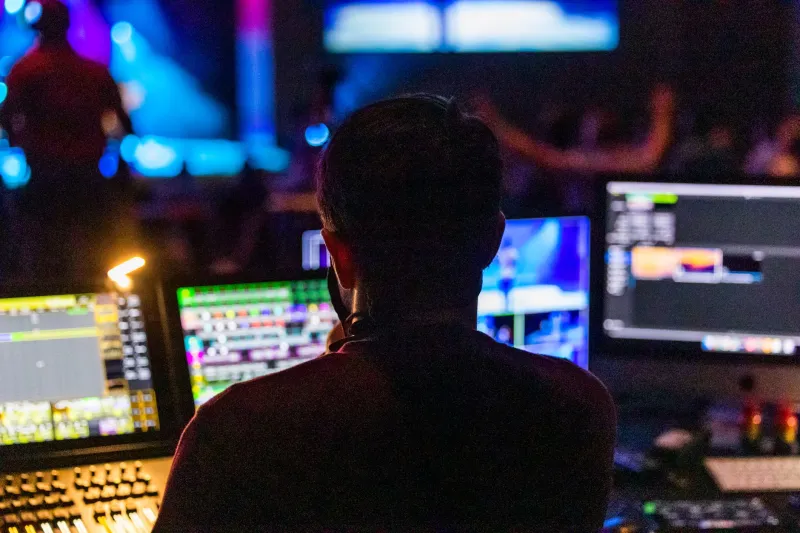
It is 21:42 on a Saturday, the headline set is three songs in, and the picture freezes on a close-up of a guitar pedal. The chat fills with question marks. Someone in Leeds refreshes the page. Someone in Cardiff assumes their broadband has packed in again. Somewhere in the control room, a producer is having the least glamorous moment of the festival.
This is not a hypothetical. Every livestream has a worst-case moment. The question for NOW Fest Live is not whether the stream will ever drop out — it is what happens when it does. Right now, too many streaming platforms treat an outage like a dirty secret: a spinner, a polite error message, and a silence that feels much longer than it is. For a paid event with a front-row promise, that silence is the real failure.
A transparent technical-failure playbook would not make NOW Fest Live look fragile. It would make the service look grown-up. Here is what that playbook should include.
The drop-out is not the disaster — the dead air is
When the main feed stutters, subscribers can forgive a lot if they know what is happening. What they cannot forgive is being left to guess. A frozen frame with no explanation feels like being shut out of the room. A clear on-screen message feels like being kept in it.
NOW Fest Live should treat every outage as a communication event first and a technical event second. That means a visible status strip, not a buried help article. It means telling viewers whether the problem is at the venue, in the broadcast chain, or at their end. And it means giving them a realistic next step, even if that step is simply: stay where you are, we are switching feeds.
The tone matters as much as the content. Nobody wants a corporate apology written by a committee. A short, human line — “We have lost the main camera. Audio is still live. Standby feed coming now.” — does more for trust than a paragraph of jargon.
Standby cameras: give us the wide shot, not a screensaver
If the primary camera chain fails, NOW Fest Live should already have a second pair of eyes on the stage. A wide shot from the back of the room is not glamorous, but it is honest. A roving camera on the barrier, a fixed stage-left angle, even a backstage feed with the stage in the background — all of these keep the event alive while the main feed is being fixed.
The key is that the standby feed should not look like an afterthought. It should be framed, colour-matched where possible, and labelled clearly. A small caption — “Standby camera — main feed restoring” — turns a compromise into a feature. It tells the viewer that the team is still in the room, still watching, still working.
And if the standby feed is a backstage angle, lean into it. A shot of a stage manager signalling cues or a crew member sprinting with a cable can be more compelling than a screensaver. It reminds people that live means live.
Artist-approved audio: keep the sound, lose the picture
For a music festival, audio is the emotional core. If the video drops but the sound survives, the show is not over. NOW Fest Live should have an audio-first fallback ready to go: a clean stage audio feed, artist-approved, with a static image or a simple “Audio continuing” card on screen.
This is where artist consent matters. Not every act will want a raw monitor mix or a backstage ambience feed pushed out to subscribers. The playbook should include pre-agreed audio options for each performance, agreed well before doors open. That way, when the picture fails, the producer is not making a rights call in the heat of the moment. They are pressing a button that was agreed weeks ago.
The audio fallback also needs to be honest about what it is. “Audio continuing — video restoring” is clear. Pretending the stream is fine when the screen is frozen is not.
Say it plainly: on-screen messaging that does not sound like a robot
A good outage message answers four questions in under ten seconds: What happened? What are you doing about it? What should I do? When will I know more?
NOW Fest Live should design these messages in advance, with variants for different failures. A main camera fault is different from a venue power issue, which is different from a problem at the viewer’s end. The wording should be short, specific, and free of engineering shorthand. “We are switching to a standby camera” is better than “Failover to secondary encode path in progress.”
The message should also appear in the player itself, not just in the chat or on social media. People watching on a TV stick or a laptop full-screen are not necessarily refreshing a status page. Meet them where they are staring.
The replay guarantee: turn a lost minute into a kept promise
If a chunk of a set is lost, NOW Fest Live should say what happens next. Will the missing section be available on replay? When? Will the replay include the full set or just the restored feed?
A simple replay guarantee would be a strong trust signal: if the live stream fails for more than a set threshold, the full performance is made available on demand within a stated window, with the affected section clearly marked. That turns a technical embarrassment into a customer promise. It also gives the team something concrete to work towards rather than just hoping nobody noticed.
The guarantee should be visible before the festival, not buried in terms and conditions. A line in the pre-show guide — “If we lose the live feed, we will publish the full set on replay within 24 hours” — sets expectations and takes the sting out of the moment it happens.
A five-step outage drill for the control room
A playbook is only useful if it is rehearsed. NOW Fest Live should run a simple outage drill before every festival weekend:
- Confirm the standby camera is framed, focused, and labelled.
- Check the artist-approved audio fallback is loaded and ready.
- Trigger the on-screen status message and read it aloud for tone.
- Confirm the replay workflow and who owns it.
- Assign one person to update the chat and social channels in plain English.
That last step is easy to forget. The chat is not a side issue; it is the front row for a lot of subscribers. A pinned message from a named producer — “Hi all, main camera down, standby feed up in 30 seconds” — does more than a dozen automated alerts.
Why this is a UK trust issue
UK viewers are not short of entertainment options. They are short of patience for services that feel like they might vanish at the worst moment. Broadband speeds vary from street to street, terraced houses to tower blocks, and people are watching on everything from a smart TV in the front room to a phone on the last train home. NOW Fest Live cannot control all of that. It can control how it responds when the signal drops.
A clear outage playbook is not an admission that the stream might fail. It is proof that the team thought about the viewer before the failure happened. For a service built on the promise of a front row, that is the difference between a nightmare scenario and a trust-building feature.
The 404 is going to happen eventually. The encore is what people remember.