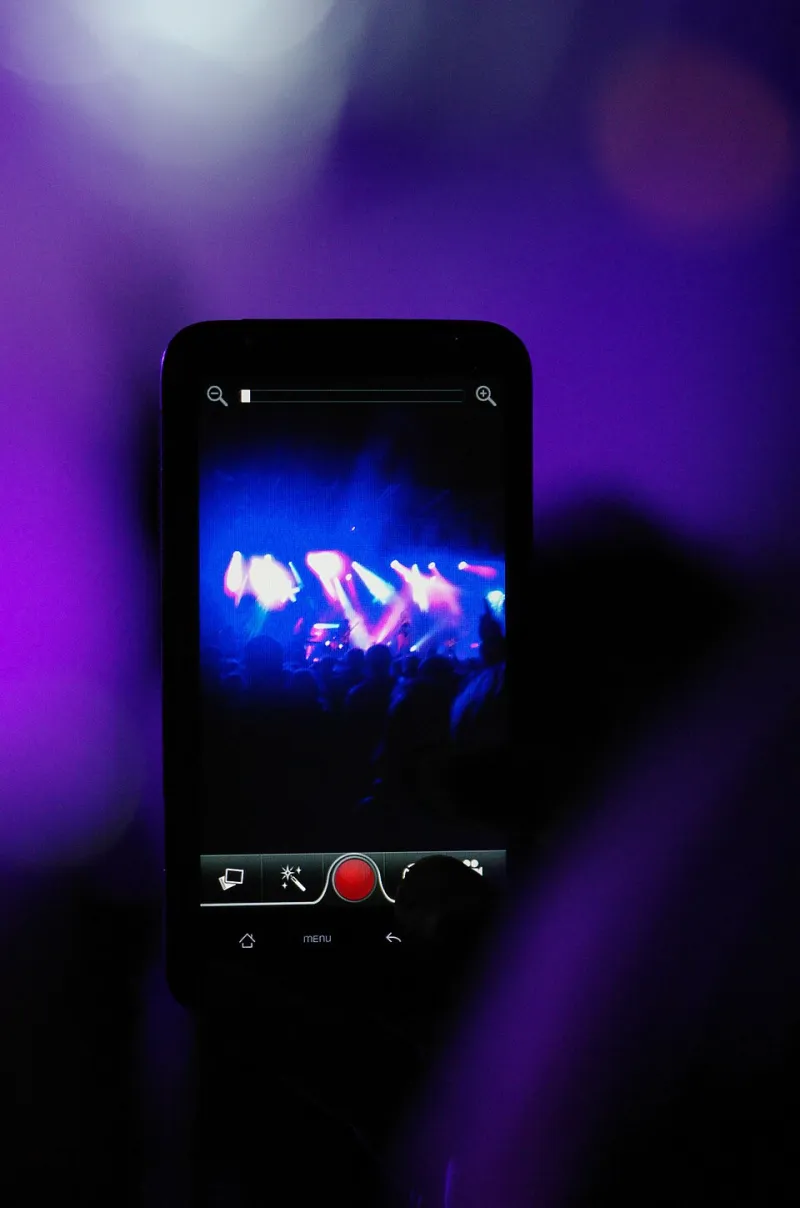
Second Screen, First Row: How the NOW Fest Live Chat Turned Watching at Home Into a Proper Night Out
There is a particular noise that used to define watching a festival from the sofa: the kettle clicking off, someone asking whether the sound is out of sync, and a phone face-down on the arm of the chair buzzing with messages you will answer tomorrow. For a lot of UK fans, that changed at some point during NOW Fest 2026. The stream kept running, sure. But the interesting stuff started happening in the panel next to it.
Let us be clear about what this is not. Nobody is arguing that a laptop beats standing in a field in a coat you regret. The point is narrower and, frankly, more interesting: the second screen has quietly become a genuine part of the festival, not a consolation prize for people who could not get there.
The sofa was never really the problem
Remote coverage has always treated viewers as a spillover audience — the ones who get the wide shots and the delayed audio and a presenter apologising for the language. The assumption was that watching at home is a passive act, and that the best you can do is make it slightly less lonely.
NOW Fest Live took a different view in 2026, and it is the sort of thing that looks obvious only after somebody does it. If the stream is a broadcast, the chat is the venue. It is where the running jokes live, where the set times get decoded, where somebody identifies the bassist before the lower-third graphic catches up. You are not watching alone; you are watching with a few thousand people who are all slightly over-caffeinated and deeply invested in a soundcheck.
A crowd needs a room, not a megaphone
What made the chat work this year was that it behaved like a room rather than a noticeboard. There were in-jokes that lasted three days. There were running tallies. There was a fairly serious campaign to get a specific mid-afternoon act moved to a bigger stage, conducted entirely in capital letters by people who had never met.
The tone across NOW Fest 2026 was markedly less shouty than the average live comment feed. Moderation teams moved quickly, the pinned messages actually said something useful, and — this matters more than it sounds — the room had a personality by Friday evening. Newcomers get absorbed into that fast. It is the digital equivalent of walking into a pub where a stranger immediately explains the local rules and buys you a packet of crisps.
The fan cam is doing the quiet heavy lifting
Reaction cameras get written off as gimmick content, but the NOW Fest 2026 fan cams did something subtler. They gave the remote crowd its own footage. When a chorus hit, you got forty little squares of people in kitchens and bedrooms and one memorable garden shed, all losing it at the same time. That is not a marketing asset. That is the thing itself.
For UK fans who cannot do the ticket, the train, the hotel and the Monday morning, it lands harder than it should. Accessibility is usually framed as a practical matter — cost, distance, health, caring responsibilities — and it is. But there is a social side to it too, and the fan cams cover it. You get to be part of the reaction rather than hearing about it on Monday.
What the artists actually see
The interesting shift is on the other side of the lens. Artists playing NOW Fest 2026 started acknowledging the chat out loud — reading a running joke off a monitor, calling out a viewer by screen name, timing a callback to a clip that had gone round the remote crowd an hour earlier. Half of it is theatre, obviously. But it does change the shape of a set: a performance with a visible second audience has more edges to it.
Backstage teams responded in kind. Clip packages started getting cut with the chat reaction already baked in — the same riff, the same ten seconds, but now with a few thousand people reacting in the corner of the frame. The livestream stopped being a recording of the event and became a parallel production with its own running order.
The bits that still crease
It is not all tidy. Chat moves fast, and fast rooms get loud and occasionally wrong. There is a real question about who gets heard when the scroll is relentless, and the answer is usually the funniest person rather than the most thoughtful one. Buffering still ruins the punchline. And there is a genuine risk that the second screen eats the first one — if you spend an entire headline set reading jokes about the headline set, that is a choice you may regret on the replay.
None of that is fatal. It is just the friction of a room full of people, which is roughly what a festival is anyway.
Where this goes from here
Expect more of it, and expect it to get more specific. Watch-parties by region, chat-led encore votes, backstage Q&As where the questions come straight off the feed. The technology is not the hard bit. The hard bit is keeping a room feeling like a room when it gets big enough to fill a stadium's worth of sofas.
The honest verdict
For years, the pitch for watching a festival at home was convenience. In 2026, it was company. The NOW Fest Live chat has not replaced the field, and it should not try. What it has done is give UK fans a second way to be part of the same weekend — no wellies required, kettle very much in play. That is a bigger deal than it sounds, and it is the reason the second screen is now the first thing people open on the Friday night.