Dead Air? More Like the Warm-Up: Letting NOW Fest Live's Changeovers Breathe
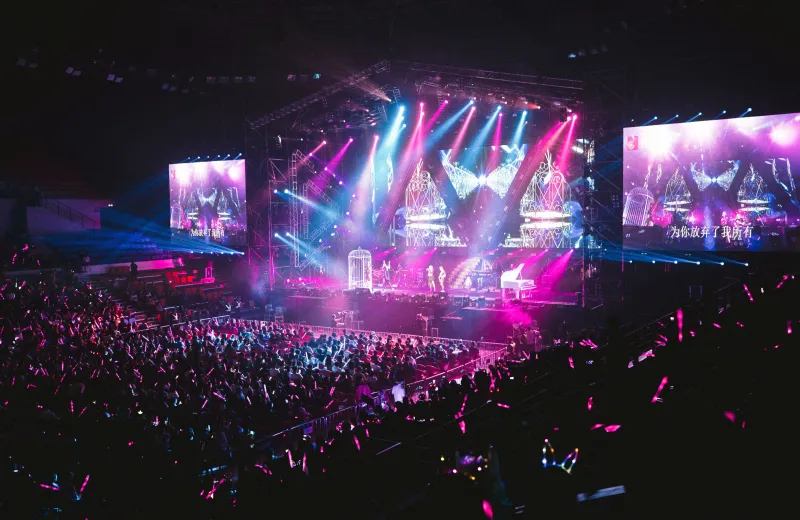
Photo: concert stage changeover crew setting up instruments crowd waiting live music, via images.pexels.com
There is a moment at every live show when the last chord dies, the house lights stay half-down, and nobody quite knows what to do with themselves. The headliner's gear is being wheeled off. A guitar tech is crouched over a pedalboard. Someone in the crowd starts a chant that never quite catches. On a good night, this is not dead air. It is the festival breathing.
On the NOW Fest Live stream, though, this is often the moment we cut away. We jump to a highlight reel, a sponsor loop, or a pre-recorded backstage package. It is tidy, it is safe, and it quietly tells viewers that the interesting part has stopped. That feels like a missed trick. The changeover is not the gap between the show and the show. It is part of the show.
The bit everyone skips is the bit everyone feels
Ask anyone who has stood on a wet Saturday at a UK festival what they remember from between sets. It is rarely the adverts. It is the sight of a drum riser being pushed into place, the low hum of a bass amp being checked, the sudden flare of a side-stage light as a keyboard is plugged in. It is the crowd's anticipation becoming its own performance: the first few rows leaning forward, the bar queue getting shorter, the person behind you confidently predicting the opening song and being completely wrong.
At home, that atmosphere does not disappear. It just needs a camera and a bit of context. NOW Fest Live already has the access. The question is whether it trusts the changeover enough to let it run.
What a good changeover feed actually shows
The strongest version of this is not a raw, unedited feed of a crew member looking for a missing cable. It is a curated window. Think of it as a rolling segment with its own grammar: a wide shot of the stage, a lower-third explaining who is setting up next, a caption naming the crew roles on display, and a presenter or voiceover giving a quick, useful line about what happens next. Not hype. Information.
There is a natural rhythm to a ten-to-twenty-minute reset. The first few minutes are about clearing the last act's kit. The middle is the technical bit: line checks, monitor tweaks, the quiet conversations that decide whether the next set sounds right. The final few minutes are the crowd turning back towards the stage. A good stream can follow that arc without pretending it is a drama. It can show the work, name the people doing it, and resist the urge to fill every silence with noise.
Access without intrusion
This is where the editorial line matters. Backstage access is a privilege, not a right, and the changeover is when artists and crews are most exposed. A camera pointed at a stressed technician trying to fix a faulty DI box is not authenticity. It is a distraction. NOW Fest Live should set clear boundaries: no close-ups of private conversations, no lingering on artists who have asked for space, no filming of production notes that are not meant for broadcast. The test is simple. Would the crew be happy to see this shot on the screen in the venue? If not, it does not belong in the stream.
The alternative is not a polished press release. It is respectful reality. A wide shot of the stage being rebuilt, a caption explaining that the next act is running a slightly longer soundcheck, a brief word from a stage manager about how the day is shaping up. That is enough. It gives viewers something real without turning the people doing the work into content.
A UK-friendly rhythm
The changeover also solves a very British problem: the need to make a cup of tea without missing anything important. If the stream cuts to a hard ad break, viewers feel punished for leaving the sofa. If it keeps a gentle, low-stakes feed running, they can pop the kettle on, come back, and rejoin the story. The same goes for the loo run, the snack hunt, and the quick check on the last train home. A changeover feed that expects people to drift in and out is a changeover feed that fits how people actually watch live music at home.
That does not mean a free-for-all. A simple on-screen timer, a clear label for what is happening, and a promise that the next set will start when it starts is more reassuring than a loop of the same trailer. It is also more honest. Festivals run late. Soundchecks overrun. The stream should not pretend otherwise.
The screen should be honest
One of the oddities of modern livestreaming is how often it tries to smooth out the live bit. We cut away from the empty stage because we are worried it looks like nothing is happening. But the empty stage is never really empty. It is full of people making the next thing possible. Showing that is not a technical compromise. It is a point of view.
NOW Fest Live has spent 2026 building a feed that feels close to the crowd. The changeover is the next step. Let the camera stay a little longer. Let the captions do some work. Let the crowd noise sit under the sound of a snare drum being tested. Give the gap its own billing, and viewers will stop treating it as a countdown to the next thing. They will start treating it as part of the night.